The Missing Variable in Most Legacy Plans
Most legacy plans are built around stability.

Most legacy plans are built around stability. Advisors are consulted, structures are designed, timelines agreed, and responsibilities mapped out with care. Everything is arranged under the assumption that decisions will continue to be made carefully and deliberately over time. From the outside, the plan looks complete.
Introduction
Most legacy plans are built around stability. Advisors are consulted, structures are designed, timelines agreed, and responsibilities mapped out with care. Everything is arranged under the assumption that decisions will continue to be made carefully and deliberately over time. From the outside, the plan looks complete.
What these plans usually optimise for is continuity of structure. Wills account for asset transfer, trusts preserve capital, and governance frameworks define authority. The plan assumes that once the system is in place, execution will follow.
What is often left unexamined is whether the person expected to execute that plan will always have the capacity to do so.
When a Sound Plan Begins to Strain
The gap usually becomes visible only when circumstances change. A health diagnosis, prolonged fatigue, or gradual decline alters how decisions can be made. The plan itself may not be flawed, but the conditions it relies on no longer exist.
Discussions that once focused on timing and valuation take on a different tone. Who can take responsibility now. How quickly authority can be transferred. What happens if leadership capacity is reduced, even temporarily.
The documents still stand. The structure still exists. What has shifted is the founder’s ability to carry the plan forward in the way it was designed.
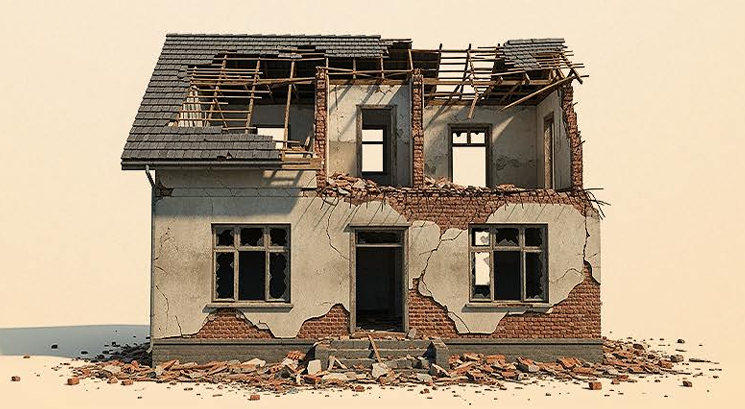
At that point, the plan begins to strain, not because of poor design, but because it assumed stable human capacity.
“The most overlooked risk in legacy planning is not financial, it is human capacity.”
The Missing Variable: Human Capacity
Legacy planning often treats execution as a constant. Health, stamina, mental clarity, and energy are assumed to remain in the background, unchanged, while the plan does its work.
Human capacity is variable. It changes slowly through ageing and fatigue, or suddenly through illness. When capacity shifts, decision‑making changes with it. Judgment narrows. Patience shortens. Clarity becomes harder to sustain.
This does not only affect the individual. It affects the quality and timing of decisions made on behalf of the family and the business. Plans that depend heavily on continuous personal leadership weaken when capacity changes, even if everything else remains intact.
Strong health can disguise this risk for a long time. When things are going well, difficult decisions are postponed under the assumption that there will be time later. When that later arrives sooner than expected, families are forced to react rather than choose.
The Cost of Planning Without Capacity in Mind
When capacity is not built into the plan, disruption follows a predictable pattern. Authority becomes unclear. Decisions are delayed or rushed. Responsibility moves suddenly to people who are available rather than prepared.
What should have been a controlled transfer becomes an urgent adjustment. Families experience stress not because change occurred, but because they were not prepared for it to occur when it did.
These outcomes are the consequence of a plan that addressed structure but ignored capacity.
What Planning with Capacity Looks Like
Plans that hold over time are designed differently. They treat human capacity as a structural variable rather than a personal one. Leadership roles are defined with sustainability in mind. Authority is shared or staged earlier, not in response to crisis. Decision‑making processes are built so they can function even when one person’s capacity changes.
Health is not treated as a private issue, but as part of continuity planning. Not in medical terms, but in practical ones. What support is required to remain effective. What decisions can be delegated gradually. How leadership transitions can occur without urgency.
When this is done early, change does not destabilise the system. The plan adapts because it was designed to adapt.
Where the Difference Truly Lies
Most legacy challenges do not arise because wealth changes, markets shift, or structures fail. They arise because execution was assumed to be permanent.
This would not unfold the same way if capacity had been treated as fundamental from the beginning. If plans accounted not only for how wealth should move, but for how people’s ability to carry responsibility might evolve.
Legacy does not unravel because health changes. It unravels because the plan never recognised that health was structural.
The families who endure are not the ones with the most sophisticated documents. They are the ones whose plans were built around people, not just systems.
“Structures endure, but the people executing them do not remain constant.”